Fastest Way to Become a Certified Personal Trainer: Quickest NCCA-Approved Options in the US sets the stage for this enthralling narrative, offering readers a glimpse into a story that is rich in detail with casual formal language style and brimming with originality from the outset.
Exploring the various pathways to swiftly attain NCCA-approved certification for personal training is both exciting and informative.
Overview of NCCA Certification for Personal Trainers
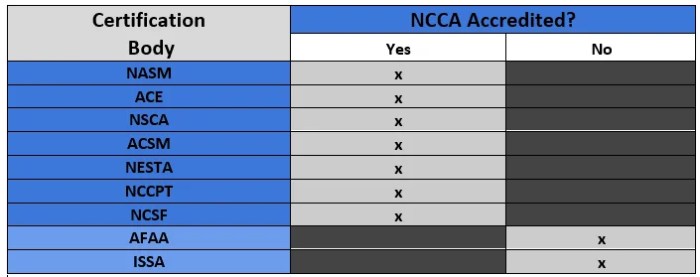
When it comes to choosing a certification for personal training, the National Commission for Certifying Agencies (NCCA) approval holds significant importance. NCCA accreditation ensures that the certification program meets high standards of quality and rigor, providing credibility and assurance to both trainers and clients.
Key Benefits of Holding an NCCA-Approved Certification
- Recognition and credibility: NCCA accreditation signifies that the certification program has been thoroughly evaluated and meets industry standards, increasing the trainer's credibility in the competitive fitness market.
- Quality education and training: NCCA-approved certifications typically have comprehensive curriculum and practical training components, ensuring that trainers are well-equipped to provide effective and safe fitness guidance.
- Employment opportunities: Many fitness facilities and employers prefer hiring trainers with NCCA-approved certifications, giving certified trainers a competitive edge in the job market.
Comparison of NCCA Accreditation with Non-Accredited Programs
Non-accredited certification programs may lack the rigorous evaluation and quality assurance that NCCA accreditation provides. Trainers with non-accredited certifications may face challenges in gaining recognition and credibility in the industry, potentially limiting their professional growth and opportunities.
Fast-Track Programs for NCCA-Approved Certification
Fast-track programs offer accelerated paths to obtaining NCCA-approved certification for aspiring personal trainers. These programs are designed to provide a quicker route to certification compared to traditional courses, catering to individuals who wish to enter the fitness industry sooner.
Examples of Reputable Institutions Offering Fast-Track NCCA-Approved Certification
- Institute 1: This institution offers a fast-track program that condenses the curriculum into an intensive training period, allowing students to complete the certification in a shorter timeframe.
- Online Platform 2: This online platform provides a self-paced fast-track course that enables individuals to study and take exams at their own convenience, leading to quicker certification.
Comparison of Duration and Intensity between Fast-Track and Traditional Certification Programs
Fast-track programs typically have a shorter duration compared to traditional certification courses, ranging from a few weeks to a few months, depending on the program structure. These programs are often more intensive, requiring a higher level of commitment and dedication from participants due to the condensed nature of the curriculum.
Online vs. In-Person Certification Options
When deciding how to pursue your NCCA-approved certification as a personal trainer, you'll need to weigh the benefits of online versus in-person options. Both have their advantages and drawbacks, so it's essential to consider your learning style and schedule before making a decision.
Online Certification Programs
Online certification programs offer flexibility and convenience for aspiring personal trainers. Here are some pros and cons to consider:
- Pros:
- Flexibility to study at your own pace and schedule.
- Cost-effective as there are no travel or accommodation expenses.
- Access to a wide range of online resources and materials.
- Cons:
- Lack of in-person interaction with instructors and peers for immediate feedback.
- Potential distractions at home that could impact your focus and learning.
- Limited hands-on experience and practical application of skills.
In-Person Certification Courses
Traditional in-person certification courses provide hands-on experience that is crucial for personal trainers. Here are some key points to consider:
- Pros:
- Immediate feedback from instructors for corrections and improvements.
- Hands-on training and practical experience with clients or equipment.
- Networking opportunities with peers and industry professionals.
- Cons:
- Fixed schedules and locations that may not be convenient for everyone.
- Higher costs due to travel, accommodation, and course fees.
- Limited access to materials and resources compared to online programs.
Cost Considerations and Financial Aid
When pursuing an NCCA-approved personal training certification, it is important to consider the costs involved. From exam fees to study materials, the typical expenses can add up quickly. However, investing in a reputable certification can pay off in the long run by enhancing your credibility and marketability as a personal trainer.
Financial Aid Opportunities
- Look for scholarships: Some organizations offer scholarships specifically for aspiring personal trainers. These can help offset the cost of certification.
- Explore payment plans: Many certification programs offer payment plans to break up the cost into manageable installments. This can make obtaining certification more feasible for those on a budget.
- Check for employer reimbursement: If you are already working in the fitness industry or plan to pursue personal training as a career change, some employers may offer reimbursement for certification expenses.
Certification Cost Comparison
- ACE Fitness: The American Council on Exercise (ACE) offers a certification program that typically ranges from $599 to $799. This program is known for its comprehensive study materials and practical approach to training.
- NASM: The National Academy of Sports Medicine (NASM) offers a certification program priced around $699 to $899. NASM is highly respected in the industry and focuses on evidence-based training methods.
- ACSM: The American College of Sports Medicine (ACSM) certification program costs approximately $349 to $499. ACSM is recognized for its scientific approach to exercise science and training.
Concluding Remarks
As we wrap up our exploration of the fastest routes to becoming a certified personal trainer with NCCA accreditation, it's clear that the journey to professional fitness training is filled with diverse options tailored to individual preferences and goals.
FAQ Section
How important is NCCA approval for personal training certifications?
NCCA approval signifies that a certification program meets national standards for quality and rigor, enhancing credibility in the fitness industry.
Are there financial aid options available for obtaining NCCA-approved certification?
Yes, aspiring personal trainers can explore scholarships, payment plans, or financial aid opportunities to support their certification journey.
What are the key differences between online and in-person certification options?
Online certification offers flexibility, while in-person courses provide practical hands-on experience crucial for personal trainers.
How can one determine the cost-effectiveness of different certification options?
Comparing the costs against the value offered by each certification program can help in assessing their cost-effectiveness.